Best Testosterone Booster 2026: A Buyer's Guide
Most "best of" lists rank the loudest marketing, not the strongest evidence. This guide builds a 2026 shortlist the other way round — from clinically dosed ingredients, third-party testing and labels you can actually read.
What is the best testosterone booster in 2026?
The best testosterone booster in 2026 is not a brand name — it is a set of criteria. It is the formula whose label prints named, standardised ingredients at amounts research has actually used, hides nothing behind a proprietary blend, and can show third-party or GMP testing. Judge the panel, not the promise, and the shortlist writes itself.
- Prioritise the four ingredients with real human data: Tongkat Ali, ashwagandha, vitamin D and zinc, each at a disclosed dose.
- Disqualify proprietary blends and tribulus on sight — one hides the numbers, the other failed to raise testosterone in review.
- Match milligrams to the research and confirm the price on the official store before you commit.
Type "best testosterone booster" into any search bar and you will get a hundred confident rankings, almost none of which agree, and almost all of which are sorted by commission rather than by evidence. That is the problem this buyer's guide exists to fix. We are an affiliate publisher — we earn if you buy through our links — and precisely because of that we are going to hand you the criteria to judge every product for yourself, including the one we cover. By the end you will be able to walk past 90 percent of the shelf in about ninety seconds, because 90 percent of the shelf cannot pass the three tests below.
What "best" actually means for a testosterone booster
Strip away the packaging and a supplement is a set of doses. The single most useful shift you can make in 2026 is to stop asking "is this brand good?" and start asking "can I verify this label?" Those are different questions with different answers. A trusted-looking bottle with a hidden blend is unverifiable. A plain bottle that prints 400 mg of a standardised extract is verifiable in seconds. Verifiability, not reputation, is what separates a serious formula from an expensive guess.
Three checks decide it, in order:
- Named, standardised ingredients. Not "herbal complex" — the actual botanical, with its standardisation percentage. Standardisation is what makes one batch resemble the material used in a study.
- Disclosed, research-matched amounts. A milligram figure beside each ingredient that you can hold up against published human trials. No number, no verdict.
- Independent quality testing. A GMP-certified facility at minimum, ideally third-party batch testing such as USP or NSF, so someone outside the company has confirmed the contents match the label.
Anything that fails even one of those is not a candidate for best testosterone booster, no matter how good the reviews look. The reviews are downstream of the marketing; the label is not.
The uncomfortable data behind most boosters
Here is the figure the category would rather you did not see. A widely cited 2020 analysis from the USC Keck School of Medicine reviewed the marketing claims of over-the-counter testosterone boosters and found that roughly 90 percent of them claimed to raise testosterone, while fewer than 25 percent had any data supporting that claim. Read that twice. Nine in ten make the promise; fewer than one in four can back it up. The gap between those two numbers is the entire business model of the low end of this shelf.
That does not mean nothing works. It means the burden of proof sits with the buyer, because the regulator does not pre-approve these claims. Dietary supplements are not reviewed by the FDA before sale, and no supplement in this category diagnoses, treats, cures or prevents any disease. What a well-built formula can honestly do is supply nutrients and standardised botanicals that human research has associated with supporting normal testosterone production — most reliably in men who were low, tired, stressed or deficient to begin with, rather than in men who were already optimal.
Ninety percent claim it, under twenty-five percent can prove it. The best testosterone booster is simply one of the honest minority — and the label tells you which minority you are holding.
The four ingredients a best testosterone booster earns its place with
If you keep only one section of this guide, keep this one. The evidence in the category is thin and uneven, but it is not empty, and it concentrates around a short list. These are the amounts that appear in published human research or official intake guidance — a description of the studies, not a dosing recommendation for you personally.
- Tongkat Ali (Eurycoma longifolia), 200–400 mg standardised extract. The most-studied natural testosterone ingredient, with several randomised trials in men, and the one we treat as the anchor of a credible formula. Our deeper write-up on the clinical evidence and dosing for Tongkat Ali walks through the trials in detail.
- Ashwagandha (standardised root extract), 300–600 mg. Best evidence is in stressed or fatigued men, where lowering cortisol appears to be part of the mechanism. Interesting but heterogeneous, and not for use in pregnancy; rare liver-injury reports exist.
- Vitamin D, roughly 3000–5000 IU where blood levels are low. Correcting a genuine deficiency is the well-supported scenario. Piling it on top of an already-adequate level is a far weaker case, which is why testing beats guessing.
- Zinc, around 30 mg. A real cofactor in testosterone production. Correcting a measured shortfall is well supported; the adult male target from all sources is 11 mg daily and the tolerable upper limit is 40 mg, so this is a top-up, not a megadose.
Notice what is not on the list: no exotic proprietary complex, no twelve-name kitchen sink. A short list at honest doses beats a long list of hidden ones every time, a point we make at length in our breakdown of what a proprietary blend legally hides.

Ready to check a label against these criteria?
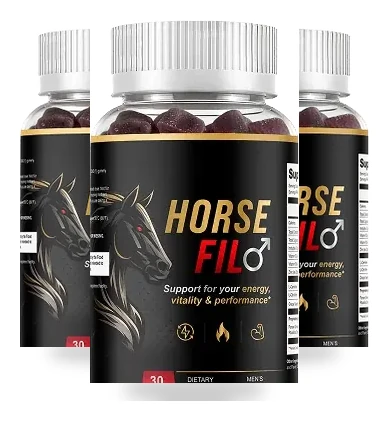
If you want to see how a men's formula presents its own ingredient list, standardisation and current pricing, the official HorseFil store is where the live panel and terms are stated — hold it up against the four ingredients above and decide for yourself.
See the official HorseFil storeRed flags that disqualify a booster instantly
Building a shortlist is as much about deletion as selection. Three signals should end your interest in a product before you read another word of its sales page.
- A proprietary blend. The moment amounts vanish behind a single blend total, the formula becomes unverifiable, and an unverifiable formula cannot be "best" at anything except concealment.
- Tribulus terrestris as a headline. Tribulus is the category's most persistent ghost. A 2014 systematic review concluded it did not increase testosterone in men, yet it still fronts countless labels because it is cheap and the name sounds potent. Its presence high on a panel is a tell about priorities.
- A twelve-ingredient mega-list. Inside a fixed capsule size, more names mean smaller shares each. An impressive-looking panel is frequently evidence of dilution, not depth.
The table below is the reference we use when a formula lands on the maybe pile. The dose column reflects amounts used in human research or intake guidance; the verdict column is our honest read of how strong the picture is.
| Ingredient | Amount used in research or guidance | How strong the picture looks |
|---|---|---|
| Tongkat Ali (standardised) | 200–400 mg daily, 4–12 weeks | Strongest natural pick. Multiple human trials show support, best in tired or lower-baseline men. |
| Ashwagandha (root extract) | 300–600 mg daily | Promising in stressed men. Heterogeneous studies; not for pregnancy; rare liver reports. |
| Vitamin D | ~3000–5000 IU where levels are low | Well supported for correcting deficiency; weak on top of adequate levels. |
| Zinc | ~30 mg (RDA 11 mg, upper limit 40 mg) | Correcting a shortfall is well supported. Not a megadose ingredient. |
| Tribulus terrestris | Widely variable, no agreed prep | Weak. A 2014 review found no testosterone increase in men. |
| Fenugreek | Several hundred mg daily | Small, short, often industry-linked studies with mixed results. Unsettled. |
| Proprietary "T-blend" | Total only, no per-ingredient amounts | Unverifiable by design. Cannot be ranked honestly. |
Objections worth taking seriously
"Aren't all these supplements basically the same?" No, and the difference is precisely the thing this guide measures. Two bottles can share an ingredient name and differ tenfold in the amount that actually reaches you. The name is marketing; the milligrams are the product. Same label word, different product.
"If the evidence is thin, why bother at all?" A fair challenge. The honest answer is that a well-dosed formula is a low-cost, low-risk experiment for a man whose diet, sleep and training are already in order and who suspects a specific shortfall. It is not a fix for a medical problem, and persistent fatigue, low libido or mood change deserve a clinician and a blood panel, not a shopping cart. A supplement is the last 5 percent, never the foundation.
"Doesn't a higher price mean a better booster?" Not on its own. Price tracks branding as much as it tracks dosing. A premium sticker on a hidden blend buys you nothing you can verify. Judge cost against printed milligrams, a discipline we unpack in our guide to what a testosterone booster should cost per month.
Where an evidence-first pick like HorseFil fits
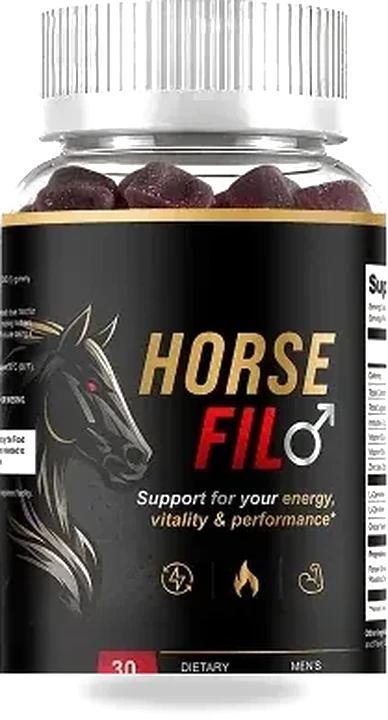
HorseFil is a once-daily men's vitality formula, and the reason we can cover it without overselling is that we hold it to the same three checks as everything else. Use the store page to read its current ingredient list, standardisation and dosing, then measure that against the four anchor ingredients and their research amounts above. If the numbers line up and the testing is in place, it earns a spot on your shortlist on merit. If a detail is missing, the missing detail is your answer — and that is exactly the standard we would want you to apply to us. An evidence-first pick is not the one with the best story; it is the one that still looks good after you have checked the panel.
How much should the best testosterone booster cost per month?
Transparently dosed formulas that use real standardised extracts tend to sit somewhere around 30 to 70 US dollars per month, and multi-bottle orders usually bring the per-month figure down. Two mistakes cost buyers the most money here: assuming cheap is a bargain, and assuming expensive is quality. Rock-bottom pricing on this shelf almost always means underdosing or a blend, because real standardised extracts are not cheap inputs. A premium price, meanwhile, proves nothing by itself. Anchor the decision to the milligrams on the panel, then confirm the live figure on the official checkout, since prices in this category change without notice.
Related reading
Questions people ask
What makes a testosterone booster the best in 2026?
The best testosterone booster in 2026 is the one whose label you can actually verify: named, standardised ingredients printed at amounts that match published human research, no proprietary blend hiding the numbers, and third-party or GMP testing behind the bottle. Everything else is packaging. A booster that cannot survive that three-part check does not belong on a shortlist, however loud the marketing.
Do any testosterone boosters actually raise testosterone?
A few ingredients have credible human trials behind them, mostly in men who were deficient, tired or under stress rather than already optimal. A 2020 USC Keck School review found that around 90 percent of over-the-counter boosters claimed to raise testosterone while fewer than 25 percent had data supporting the claim. The honest position is: some formulas may help some men modestly, none is a substitute for medical care, and no supplement treats a diagnosed condition.
Which ingredients should a top booster contain?
Look for the small group with the strongest human evidence at disclosed doses: Tongkat Ali standardised extract at 200 to 400 mg, ashwagandha root extract at 300 to 600 mg, vitamin D at roughly 3000 to 5000 IU where blood levels are low, and zinc around 30 mg. These are amounts research has used, not a prescription. Skip tribulus, which a 2014 review found did not raise testosterone, and skip anything that buries these behind a blend.
How much should a quality booster cost per month?
A transparently dosed formula using standardised extracts usually lands somewhere around 30 to 70 US dollars per month, with multi-bottle orders lowering the per-month figure. Rock-bottom pricing almost always signals underdosing or a blend, while a premium price is no guarantee of quality on its own. Judge cost against the printed milligrams, not against the size of the discount, and confirm the current price on the official store before ordering.
Where to check this
- NIH Office of Dietary Supplements — Dietary Supplements: What You Need to Know
- NIH Office of Dietary Supplements — Zinc fact sheet
- NIH Office of Dietary Supplements — Vitamin D fact sheet
- National Center for Complementary and Integrative Health — Using Dietary Supplements Wisely
- Mayo Clinic — Testosterone therapy: Potential benefits and risks as you age
These are standing reference resources rather than citations of individual trials. We link to the bodies that maintain the evidence summaries so you can check the current position yourself.
Choosing well is a two-minute skill that outlasts every ranking on the internet. If you already know what you want and are only working out where to buy the best testosterone booster through an official channel rather than a marketplace listing, visit the official HorseFil store or read our ingredient notes