Buy Testosterone Booster: What a Proprietary Blend Hides
Two words on a panel remove the only number that would let you judge a formula. Here is what the blend format legally means, which popular beliefs about it are wrong, and what you can still work out from the label.
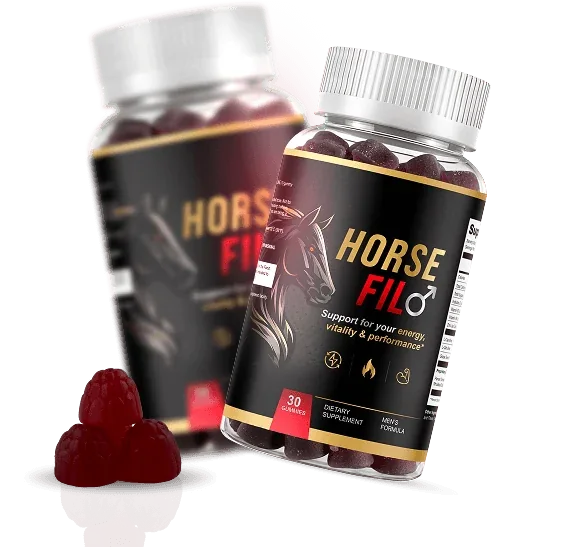
Quick answer
A proprietary blend is a legal labelling format that lets a manufacturer print the total weight of a group of ingredients instead of the amount of each one. If you are about to buy testosterone booster capsules and the panel shows a blend, you cannot tell whether any single ingredient reaches the amount used in published research — and neither can anyone claiming otherwise.
- Ingredients inside a blend must be listed in descending order by weight, so you learn rank but never quantity.
- The blend total is a ceiling: nothing inside it can be present at more than that figure, which is often the most useful thing on the whole label.
- A blend is not proof of a weak formula. It is proof that the formula cannot be checked, which is a different and more awkward problem.
Pick up almost any men's formula and the Supplement Facts panel splits into two halves. The top half is honest arithmetic: vitamins and minerals with milligram or microgram amounts you can compare to intake guidance. The bottom half is where the marketing lives — a bolded blend name, a single total, and then a list of botanical names with no numbers beside them at all. That second half is the part this article is about, because it is the part that decides whether the product can be evaluated or merely believed.
What a proprietary blend actually is, in plain terms
United States supplement labelling rules require dietary ingredients to be declared with their amount per serving. There is a carve-out: where ingredients are combined into a proprietary blend, the manufacturer may declare the total weight of the blend and list the ingredients within it in descending order of predominance, without stating each individual quantity. That is the whole mechanism. It is legal, it is common, and it is not in itself evidence of bad faith.
What it does is transfer the burden of proof. Outside a blend, a label makes a checkable claim: 200 mg of a standardised extract either matches the amount used in the studies or it does not, and you can do that comparison at the shelf. Inside a blend, the same ingredient becomes a name on a list. The claim stops being checkable and becomes something you either trust or you do not.
Three facts survive the blackout, and they are worth extracting every time:
- The ceiling. If the blend totals 500 mg and contains eight ingredients, no single one of them can exceed 500 mg, and realistically none is close to it. Compare that ceiling against the gram-scale doses used in a lot of the research and the arithmetic often settles the question on its own.
- The rank. Descending order of predominance is mandatory. The first name carries the most weight, the last carries the least. An ingredient in eighth position out of eight, inside a small blend, is present in a token quantity.
- The gap between the two halves. A label that publishes exact amounts for the cheap vitamins and hides the expensive botanicals has told you something about where the budget went.
Myth check one: the blend protects a secret formula
This is the standard defence and it does not survive contact with how the industry works. The ingredient list is printed on the bottle already, in order. What is hidden is only the ratio. Any competitor with a modest budget can send a bottle to an analytical laboratory and get a serviceable breakdown, and contract manufacturers producing formulas for several brands at once already know the common templates by heart.
Meanwhile the party that genuinely cannot obtain the information is the customer, who has neither a laboratory nor a purchase order. A secrecy measure that conceals nothing from professionals and everything from buyers is not protecting intellectual property. It is protecting a comparison.
A blend does not keep the formula from your competitors. It keeps the arithmetic from your customers. Those are very different goals, and only one of them requires hiding milligrams.
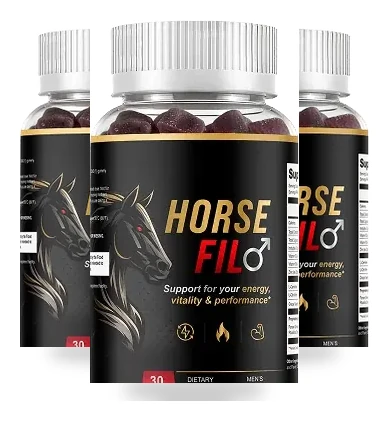
Checking a panel before you commit?
Whether you are trying to buy best testosterone booster options on evidence rather than packaging, or simply want to see how one men's formula presents its own ingredient list, the store page is where the current panel and terms are stated.
See the official storeMyth check two: the blend total tells you enough
A large total looks reassuring and frequently is not. Consider a 1,500 mg blend containing twelve ingredients. That number sounds generous until you remember that a single ingredient with a decent evidence base might have been studied at 1,000 mg or more on its own. If one ingredient took most of the total, eleven others are sharing scraps. If the total is distributed evenly, every one of the twelve is far below anything that has been tested.
The blend total is a constraint, not a credential. It is genuinely useful in one direction only: it can prove a formula is too small to work as advertised. It can never prove the opposite.
There is a related trick worth naming. Some panels list an impressive blend, then place the cheapest high-volume ingredient first — a bulking agent, a common amino acid, a fruit powder — so that the total is dominated by the least interesting item on the list. The names that sold you the product sit in positions six through twelve.
Myth check three: the ingredient names are the evidence
The most persistent belief in this category is that an ingredient with published research behind it lends that research to any product containing it. It does not. Research is done on a dose, in a form, for a duration, in a population. A product borrows a study's credibility only if it matches all four, and a blend makes at least the first of those impossible to verify.
This is where the phrase "clinically studied ingredients" earns its careful wording. It is a claim about the ingredient, not about the product. A formula containing 15 mg of something studied at 600 mg can print that phrase without lying, and readers will hear a claim that was never made.
The same applies to the long ingredient list. Twelve names look more serious than four. In practice a longer list inside a fixed total means smaller shares each, so an impressive-looking panel is often evidence of dilution rather than depth. Four ingredients at meaningful, printed amounts is a stronger document than twenty hidden in a blend.
What the evidence shows for the headline ingredients
Below is the honest state of play for the compounds that dominate men's formulas. The dose column describes amounts that appear in published human research or in official intake guidance, not a recommendation. Ranges are wide because the studies disagree with each other, which is itself part of the finding.
| Ingredient | Usual form sold | Amounts used in research or intake guidance | How strong the picture looks |
|---|---|---|---|
| Zinc | Gluconate, picolinate, citrate | Adult male RDA 11 mg daily from all sources; tolerable upper limit 40 mg | Correcting a measured deficiency is well supported. Adding it to an adequate diet is a much weaker case. |
| Magnesium | Citrate, glycinate, oxide | Adult male RDA 400–420 mg daily from all sources | Dietary shortfalls are common. Its promotion as a hormone lever runs ahead of the fact sheets. |
| Tribulus terrestris | Standardised extract | Widely variable; trials rarely agree on a preparation | Weak. Human work on hormone outcomes has largely not supported the marketing claims. |
| Fenugreek | Seed extract, often trademarked | Several hundred milligrams daily in trials | Small, short, industry-linked studies with mixed results. Not settled. |
| Ashwagandha | Standardised root extract | Several hundred milligrams daily in trials | Interesting but heterogeneous. Cases of liver injury have been reported and it is not for use in pregnancy. |
| Panax ginseng | Standardised extract | 200–400 mg of extract in most trials | Small studies, varied preparations, documented interaction with warfarin and effects on blood glucose. |
| L-citrulline | Free-form or citrulline malate | Gram-scale doses in exercise research | A real pathway with modest short-term performance endpoints. Not a hormone claim at all. |
| Maca root | Powder or extract | Gram-scale amounts in most published work | Traditional use with small trials. A capsule-sized dose is far from what the studies used. |
Look at the dose column and then imagine any of those ingredients sharing a 500 mg blend. That single mental exercise disposes of more marketing than any amount of ingredient-by-ingredient argument. It is also the reason we will not tell you which product is best: where amounts are hidden, an honest ranking is not available, and where they are printed, you can do the comparison yourself in a minute.
Read the panel in ninety seconds before you buy testosterone booster capsules
A short procedure, in order. It works on a phone in a shop and on a product page before checkout.
| Step | What to look at | What it settles |
|---|---|---|
| 1 | Serving size and servings per container | Whether the listed amounts apply to one capsule or four, and how long a bottle really lasts |
| 2 | How much of the panel is printed with amounts | The share of the formula you are able to evaluate at all |
| 3 | The blend total, if there is one | The hard ceiling for every ingredient inside it |
| 4 | Position of the ingredient you actually came for | Its rank by weight, and whether it is plausibly more than a garnish |
| 5 | Standardisation percentages on extracts | Whether the extract resembles the one used in research |
| 6 | Independent testing marks such as USP or NSF | Whether anyone outside the company has checked the contents match the label |
| 7 | The return window on the checkout page | Your only practical recourse if the physical panel disappoints |
What this cannot tell you, including about the product we cover
Consistency requires applying the standard here as well. The formula this site covers names six ingredients and does not publish an amount for any of them. That means the honest verdict on whether it delivers a meaningful dose of citrulline, ginseng or anything else is: unknown. We are an affiliate publisher, we would earn more by guessing generously, and we are not going to.
Some further limits, stated plainly:
- No dietary supplement diagnoses, treats, cures or prevents any disease. Products in this category may support general wellbeing; they are not treatments, and a label that implies otherwise is the clearest signal to walk away.
- A hidden panel is not proof of a bad product, only proof that the claim cannot be checked before purchase. Some blended formulas are perfectly reasonable. You will simply never know which.
- Symptoms deserve a clinician, not a shortlist. Persistent fatigue, low libido or mood change have many possible causes, several of them treatable and none of them addressed by shopping.
- Buying quietly is its own risk. Regulators maintain public lists of products marketed for male performance that were found to contain undeclared pharmaceutical ingredients, and those products almost always reach buyers through unofficial channels. Where you buy matters, which is the subject of our guide to subscription traps in men's supplement checkouts.
If you want the timing side of this rather than the label side, our piece on the morning testosterone peak and dose timing covers what the hour of day can and cannot change.
Questions people ask
Is a proprietary blend legal on a supplement label?
Yes. United States labelling rules allow a manufacturer to declare a blend by its total weight and to list the ingredients inside it in descending order of predominance, without printing each individual amount. It is a permitted format, not a violation. What it removes is your ability to compare the product against published research.
Does a proprietary blend mean the product is underdosed?
Not necessarily, and that is the honest answer. A blend can hide a generous formula just as easily as a thin one. The problem is that it makes the question unanswerable from the outside, so a buyer is left trusting a claim instead of checking a number.
What can I still learn from a blend that lists no amounts?
Three things. The total weight of the blend sets a hard ceiling: nothing inside it can exceed that figure. The order tells you rank, because ingredients must appear from most to least by weight. And an ingredient sitting near the end of a small blend cannot be present at a gram-scale dose, whatever the marketing says.
Are named branded ingredients better than a blend?
Often, because a trademarked extract usually comes with a specified standardisation and a stated dose, which is exactly the information a blend removes. It is still worth checking that the amount in the product matches the amount used in the research the brand cites, since the two frequently differ.
Where to check this
- NIH Office of Dietary Supplements — Dietary Supplements: What You Need to Know
- NIH Office of Dietary Supplements — Dietary Supplements for Exercise and Athletic Performance
- National Center for Complementary and Integrative Health — Using Dietary Supplements Wisely
- National Center for Complementary and Integrative Health — Asian Ginseng
- Mayo Clinic — Supplements: Nutrition in a pill?
These are standing reference resources rather than citations of individual trials. We link to the bodies that maintain the evidence summaries so you can check the current position yourself.
Reading a panel is a two-minute skill that outlasts every product on the shelf. If you already know what you want and are only working out where to buy testosterone booster formulas through an official channel rather than a marketplace listing, visit the official store or read our ingredient notes