Testosterone Booster Cost Per Month, Explained
Sticker price tells you almost nothing. The number that decides whether a formula is a bargain or a rip-off is cost per clinically dosed serving — and it is easy to work out once someone shows you how.

How much do testosterone boosters cost per month?
Quality testosterone boosters typically cost about thirty to seventy dollars per month. What matters more than the sticker price is the cost per clinically dosed serving: a cheap bottle that underdoses its ingredients is not good value, and a pricier one at effective doses often is. Budget two to three months to judge results.
- Compute cost per effective serving, not per bottle, before you compare products.
- Cheap and underdosed is not value; watch for auto-ship subscription traps at checkout.
- Buy a two-to-three-month supply, because results build over eight to twelve weeks.
Work out the testosterone booster cost that actually makes sense and you will stop overpaying almost immediately — because most men compare the wrong number. They look at the price on the front of the bottle, pick the cheapest or the flashiest, and never once check what that money is buying per serving. The supplement industry relies on exactly this. A low sticker price can hide a formula so underdosed it does nothing, and a high one can hide the same. The only way to see through both is to do a little arithmetic before you reach for a card, and this guide is that arithmetic.
Here is the honest range to anchor on. A well-formulated men's testosterone or vitality product generally lands somewhere around thirty to seventy dollars for a month's supply, with the sensible options clustering in the middle. Below that range you should be suspicious of the doses; above it you should ask what the premium is actually paying for. But the range is only a starting point — the real work is turning a shelf of different bottle sizes, serving counts and multi-buy deals into a single comparable figure.
Cost per serving beats cost per bottle, every time
The trick the pricing plays on you is that no two products are packaged the same way. One bottle holds 30 servings, another 60; one is a single daily capsule, another is three; one is sold alone, another only in a three-pack. Comparing the front prices of two bottles like that is meaningless. So convert everything to one number: cost per day at the labelled serving. Take the price, divide by the number of servings in the bottle, and you have it. A $60 bottle of 30 servings is $2.00 a day. A $45 bottle of 30 servings is $1.50 a day. A $50 bottle that looks cheaper but contains only 20 servings is $2.50 a day — the most expensive of the three, despite the middle sticker price.
Then add the second, harder layer: is that serving actually a clinically dosed serving? A product can be cheap per day precisely because each serving contains a fraction of the amount used in research. If the good ingredient appears at a token dose, the low cost per serving is an illusion — you are paying a little for nothing rather than a fair amount for something. This is where the label reading in what to look for in a natural testosterone booster becomes a pricing tool, not just a quality one: the dose determines whether the cost per serving means anything at all.
| Product | Sticker price | Servings per bottle | Cost per day | Real question to ask |
|---|---|---|---|---|
| Budget bottle | Low | Often 20–30 | Looks cheap | Are the doses a fraction of what research used? |
| Mid-range bottle | Moderate | Usually 30 | The benchmark | Are amounts disclosed and clinically meaningful? |
| Premium bottle | High | 30–60 | Higher per day | What does the premium buy — dose, testing, or marketing? |
| Multi-buy pack | High upfront | 90–180 | Usually lowest per day | Is it a one-time buy or a recurring subscription? |
Run every product you are considering through the "cost per day" column and the comparison stops being emotional. The cheapest sticker rarely wins, the most expensive rarely does either, and the multi-buy pack is usually the lowest per-day cost — provided it is a genuine one-time purchase and not a subscription in disguise, which is the next trap to understand.

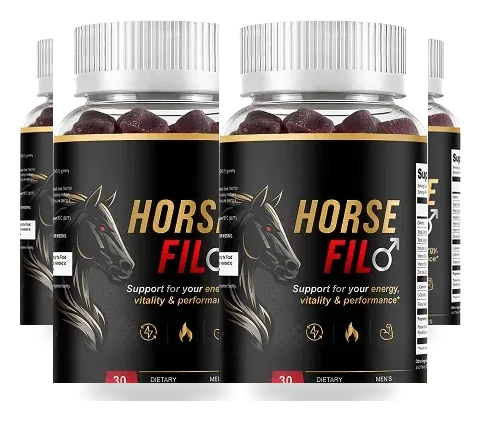
Want to see the real per-serving cost, not a teaser price?
The official store lists every pack size and serving count in one place, so you can do the cost-per-day maths yourself before you decide. No teaser trial, no guessing what a bottle actually holds.
See the official storeWhy a low testosterone booster cost is not the same as value
It is tempting to treat the lowest price as the safest bet — less money at risk on something unproven. But a cheap, underdosed booster is arguably the worst value on the shelf, because you spend real money and get a formula with no plausible chance of doing anything. You have not saved; you have bought a placebo at a discount, and worse, you may conclude that the whole category is useless when what failed was the dose, not the concept.
Value, properly defined, is the cost of getting clinically meaningful amounts of ingredients that have a mechanism, from a seller you can trust, with testing behind them. Sometimes that is a mid-range product; occasionally it is a premium one; almost never is it the cheapest thing on the page. The same logic works in reverse: an expensive product is not automatically good, because a high price can fund glossy marketing just as easily as a strong formula. Both extremes require the same defence — convert to cost per clinically dosed serving and let the number decide. For a shelf-wide application of this, our 2026 testosterone booster buyer's guide pairs the pricing maths with the label reading.
The subscription and auto-ship trap
Here is where more money is quietly lost than on any single overpriced bottle. A large share of supplement offers are structured around auto-ship: a low headline price, sometimes a "free trial" or a steep first-order discount, that silently enrols you in a recurring subscription billed at full price every month until you cancel — and cancelling is often deliberately awkward. The consumer watchdogs have a name for this, negative-option marketing, and the Federal Trade Commission has taken repeated action against sellers who bury the recurring terms.
The defence is simple and it happens at the checkout, not before. Read the page where you enter your card. Look for a pre-ticked box, the words "recurring", "auto-ship", "subscribe and save by default", or a trial that "converts", and read the cancellation terms before you agree to anything. Wherever possible, choose a plain one-time purchase — and note that a multi-bottle one-time pack is frequently cheaper per day than the subscription anyway, so you lose nothing by avoiding the recurring plan. We documented the specific tactics in a dedicated piece on the subscription traps hidden in men's supplement checkouts, and they are worth recognising on sight.
How many months should you actually buy?
This is where cost and biology meet. Nutritional supplements are not fast-acting drugs; any honest men's formula, including the one this site covers, describes an eight-to-twelve-week window before you assess it. That has a direct pricing consequence: a single 30-day bottle cannot give the product a fair trial, so buying one and judging it after three weeks wastes the money you did spend. To test a booster properly you need roughly two to three months of consistent use.
Conveniently, that is also where the per-day cost is usually lowest, because multi-bottle packs carry the biggest discount. So the value-maximising move and the biology-respecting move are the same one: buy a two-to-three-month supply as a single one-time purchase, take it daily, and judge it at the end of the window rather than the end of the first week. The one caveat is order-of-operations — only commit to the larger quantity after you have checked the label is worth committing to. Verify the doses first, then buy the supply that gives it a fair test.
Three cost objections, answered honestly
"Isn't any of this money just wasted on a supplement?" It can be, if you buy badly. The way to avoid waste is not to spend nothing — it is to spend on disclosed, clinically dosed ingredients and to skip products that hide their amounts. Money spent on a transparent, correctly dosed formula is a considered purchase; money spent on a proprietary-blend mystery is the actual waste.
"The multi-bottle pack costs more, so it's the expensive option." Upfront, yes; per day, almost always no. Divide the pack price by its total servings and compare that to a single bottle's cost per day. The pack is usually cheaper on the only basis that matters, and it happens to cover the eight-to-twelve-week window you need anyway. Higher total, lower unit cost.
"A premium price must mean a premium formula." Not reliably. Price funds whatever the company chooses, and that can be doses and testing or it can be influencer budgets and packaging. The only way to know is to read the panel and compute cost per effective serving. Treat price as a question, never as an answer.
Where HorseFil's value sits
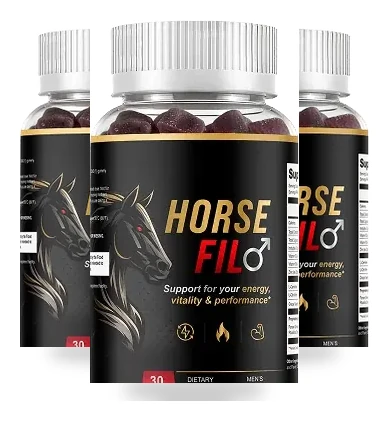
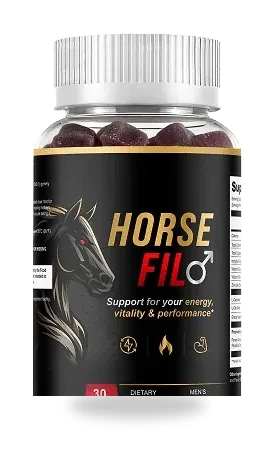
To be straight about the product this site covers: HorseFil is presented as a once-daily men's gummy on the circulation side, and it is sold in single-bottle and multi-bottle packs through the official store. In keeping with our policy, we do not print prices we cannot stand behind — figures change without notice and the store is the only authoritative source — so rather than quote a number that might be stale, we point you to the official listing to run the cost-per-day maths for yourself. Apply the same test you would to any competitor: divide the pack price by its total servings, check that the doses on the panel are meaningful, and confirm the checkout is a one-time purchase rather than an auto-ship enrolment.
Do that and you will know, in a single figure, whether it is fair value at a clinically dosed serving — which is exactly the standard every product in this category should be held to, and the only one that protects your wallet.
Questions people ask
How much do testosterone boosters cost per month?
Quality testosterone boosters generally run about thirty to seventy dollars a month, with well-formulated products clustering in the middle of that range. Very cheap options are often underdosed, and the most expensive are not automatically the best. The figure that actually matters is the cost per clinically dosed serving, not the price on the front of the bottle.
Are expensive testosterone boosters worth it?
Sometimes. A higher price can buy clinically meaningful doses, transparent labelling and third-party testing, all of which are worth paying for. But price alone guarantees nothing, and plenty of premium-priced products are marketing wrapped around a thin formula. Work out the cost per effective serving and compare that, rather than assuming expensive means better.
How do I avoid supplement subscription traps?
Read the checkout before you enter a card. Many supplement deals default you into an auto-ship subscription, sometimes after a cheap or free trial, then bill monthly at full price. Look for pre-ticked boxes, the word recurring, and the cancellation terms, and prefer a plain one-time purchase. Buying a multi-bottle supply outright is often cheaper and avoids the trap entirely.
How many months should I buy to see results?
Plan on two to three months. Nutritional supplements work over an eight-to-twelve-week window, so a single bottle rarely gives it a fair test. Buying a two or three month supply upfront usually lowers the per-bottle cost and matches the time the formula actually needs, but only commit to that quantity once you have checked the label is worth it.
Where to check this
- FTC Consumer Advice — Free trials can cost you
- FTC — Negative option marketing guidance
- NIH Office of Dietary Supplements — What you need to know
- FDA — Dietary supplements overview
- Mayo Clinic — Dietary supplements: do you need them?
These are standing reference resources rather than citations of individual trials. We link to the bodies that maintain the evidence summaries so you can check the current position yourself.
Related reading
Best Testosterone Booster 2026: Buyer's Guide
Pricing maths paired with label reading, applied panel by panel across a shelf of real products.
Natural Testosterone Booster: What to Look For
The dose disclosure that turns cost per serving into a meaningful number rather than an illusion.

Male Enhancement Pills: What Actually Works
Which ingredients have a real mechanism, which are hype, and why hidden-drug pills are a safety risk.
Do the cost-per-serving maths once and you will never overpay again. When you are ready to check the real per-day figure against the panel, visit the official store or see how the packs are priced