Best Natural Blood Sugar Supplement: What Natural Really Means
“Natural” is the most common word in this category and one of the least regulated. Here is what it is allowed to mean, what it is not, and which words on the panel actually carry a definition.

Quick answer
There is no legal definition of the word “natural” for a dietary supplement, so no product can honestly be ranked as the best natural blood sugar supplement on the strength of that word alone. “Natural” describes where an ingredient is said to have come from — it tells you nothing about how much is in the capsule, how it was extracted, or whether it has been studied in people. The label terms that do carry a fixed meaning are different ones: USDA Organic, Non-GMO Project Verified, USP Verified, NSF Certified, and the Supplement Facts panel itself.
- The FDA has never formally defined “natural” for foods or supplements; it operates only on a long-standing informal policy.
- Botanical origin says nothing about dose, and dose is the variable almost every glucose study turns on.
- Plant-derived does not mean interaction-free. Ginseng, berberine and cassia cinnamon all carry documented cautions.
Type a glucose-related search into any store and the results sort themselves into two piles: the ones that lead with a botanical name and a green leaf, and the ones that lead with a chemical name. Shoppers overwhelmingly reach for the first pile. That instinct is understandable and it is also the single least informative filter available, because the word doing the sorting has no agreed meaning behind it.
What “natural” actually means on a supplement label
It means whatever the person writing the label decided it should mean. The FDA has acknowledged that it has not established a formal definition of “natural” for food labelling. It works from an informal, long-standing policy: the agency has not objected to the term where nothing artificial or synthetic has been included in a food that would not normally be expected to be there. That policy was written for foods, it says nothing about processing, nutrition or safety, and the agency has publicly taken comment on whether it should be updated.
Dietary supplements sit inside food law rather than drug law. Under the Dietary Supplement Health and Education Act of 1994, supplements do not go through pre-market approval for either safety or effectiveness. The manufacturer is responsible for the claims and for the product being what the label says. The FDA acts afterwards, on problems. So when a bottle says “100% natural”, nobody at a federal agency has checked that sentence before it reached the shelf.
Two adjacent terms do have definitions, which is exactly why they get borrowed for a halo:
- Organic is defined and certified through the USDA National Organic Program. It governs how a crop was grown and handled. It is a genuine, auditable standard — and it is a standard about farming, not about whether a compound does anything in your bloodstream.
- Natural in the meat and poultry aisle is defined by USDA as minimally processed with no artificial ingredients. That definition does not travel with the word onto a capsule bottle.
Why the best natural blood sugar supplement is a marketing question, not an evidence one
Rank any shortlist by “natural” and you are ranking by adjective. Rank the same shortlist by what is printed in the Supplement Facts panel and the order changes completely, because now you are comparing milligrams against the amounts used in published trials. A capsule containing 50 mg of a botanical studied at one to six grams a day is fully natural and still, on the arithmetic, unlikely to reproduce anything the studies saw.
This is the practical failure of the whole framing. Someone searching for the best natural blood sugar supplement is usually trying to ask a reasonable question: which of these is least likely to do me harm and most likely to do something. “Natural” answers neither half. Dose, extraction standard and third-party testing answer both, and all three are printed on the bottle or absent from it.
Natural is a claim about origin. It is not a claim about dose, purity, standardisation or effect — and every question worth asking about a glucose-support product lives in those four.
Natural does not mean gentle, and it does not mean interaction-free
The most expensive assumption in this category is that a plant extract is automatically safer than anything else in the medicine cabinet. Some of the best-documented supplement interactions in the literature involve botanicals sold for glucose support.
- Panax ginseng has documented interactions with the anticoagulant warfarin and may affect blood glucose, which matters most for the exact person who is likely to buy it: someone already taking medication that affects glucose.
- Berberine influences drug-metabolising enzymes and transporters, so it can change the levels of other medicines. It commonly causes digestive upset, and it is not considered appropriate during pregnancy or for infants.
- Cassia cinnamon, the cheap supermarket type used in most supplements, contains coumarin. European food-safety bodies set a tolerable daily intake for coumarin precisely because high habitual intakes are a liver concern for some people. Ceylon cinnamon contains far less.
- Bitter melon, fenugreek and gymnema are all traditionally used and all have thin, small-trial evidence bases, which means their interaction profiles are less well mapped rather than known to be clean.
None of this makes botanicals dangerous. It makes them pharmacologically active, which is the whole reason anyone buys them. Activity and risk are the same coin. A product that genuinely did nothing would also interact with nothing.
Read the panel before you rank the adjective
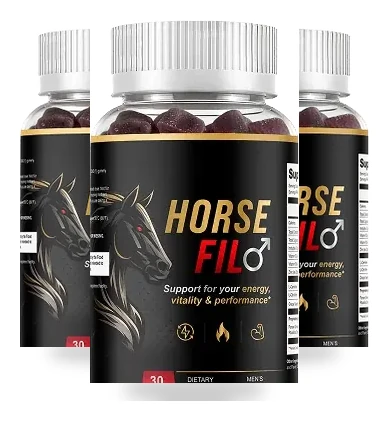
If you are shortlisting a men's formula on the strength of its ingredient list, the useful comparison is the printed panel next to the doses in the research — not the word on the front of the box.
See the official storeWhat is actually inside a “natural” capsule
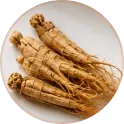
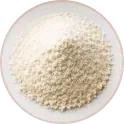
Almost nothing sold as a supplement is a plant. It is an extract of a plant, and extraction is industrial chemistry. A root is dried, milled, and run through a solvent — often ethanol, water, or a mixture — and the solvent is driven off to leave a concentrated powder. What comes out the other end is a white or tan powder that looks nothing like the plant and does not contain everything the plant contained.
Two numbers describe that powder, and a good label prints both:
- The extract ratio, written as 4:1 or 10:1. It means four or ten parts of raw plant went in for every one part of powder that came out. It is a measure of concentration, not of what is in there.
- The standardisation, written as “standardised to 5% ginsenosides” or similar. This is the more useful figure, because it names the compound class the research measured and commits the manufacturer to a percentage of it.
A label that says only “Ginseng Root Extract 100 mg” has told you a weight and left out the two facts that make the weight interpretable. That is not a natural-versus-synthetic problem. It is a disclosure problem, and it is the same problem that sinks most product comparisons — one we take apart in detail in our piece on proprietary blends and underdosed ingredients.
The label words that do carry a definition
If you want a filter that means something, use these instead. The right-hand column is the part most shoppers skip.
| Term on the label | Who defines it | What it tells you | What it still does not tell you |
|---|---|---|---|
| Natural / all-natural | No one, formally | An origin story | Dose, purity, standardisation, evidence, safety |
| USDA Organic | USDA National Organic Program, certified | How the crop was grown and handled | Whether the ingredient does anything |
| Non-GMO Project Verified | An independent non-profit standard | Absence of genetically engineered inputs | Dose or potency |
| Made in a cGMP facility | FDA rules for supplement manufacturing practice | The process has documented quality controls | That the formula works, or that anyone tested this batch |
| FDA registered facility | A facility registration requirement | The plant is on a list | Nothing about approval — the FDA does not approve supplements |
| USP Verified / NSF Certified | Independent testing organisations | The contents match the label and screening for contaminants was done | Whether the dose is the one used in research |
| Standardised to X% | The manufacturer, verifiably | A committed percentage of a measured compound | Whether that percentage matches the studied extract |
What the evidence shows for the popular botanicals
Here is the honest state of play for the ingredients that dominate this shelf. Note that the dose column describes amounts used in published human trials, not a recommendation, and that trial ranges are wide because the studies disagree with each other.
| Ingredient | Usual form sold | Daily amounts used in trials | How strong the picture looks |
|---|---|---|---|
| Chromium | Picolinate or polynicotinate | 200–1,000 mcg | Inconsistent. NIH's own summary describes the glucose findings as mixed and the quality uneven. |
| Cinnamon (cassia) | Powder or extract | 1–6 g | Mixed. Pooled analyses disagree, trials are small and short, and the cassia coumarin issue sits on top. |
| Berberine | Berberine HCl | 1,000–1,500 mg, split across doses | The most active of the group, and the one with real interaction and tolerability caveats. Trial quality is a recurring criticism. |
| Magnesium | Citrate, glycinate, oxide | RDA for adult men is 400–420 mg from all sources | Correcting a genuine dietary shortfall is well justified. Taking it as a glucose intervention is a different and weaker proposition. |
| Panax ginseng | Standardised extract | 200–400 mg extract in most trials | Small studies, varied preparations, documented interactions. Not a settled picture. |
| Gymnema, fenugreek, bitter melon | Powders and extracts | Widely variable | Traditional use with small, low-quality trials. Weak. |
Read down that last column and a pattern appears. The ingredients with the most convincing mechanisms tend to be the ones with the most caveats attached, and the ones with the friendliest marketing tend to have the thinnest files. If you are shopping for the best herbal supplement for blood sugar, that column, not the leaf on the front of the box, is what you are actually choosing between.
What this cannot do, stated plainly
No dietary supplement diagnoses, treats, cures or prevents any disease, and this one is not an exception dressed in botanical clothing. A few specific limits are worth naming:
- Nothing here is a substitute for prescribed medication. If you take a glucose medicine, adding an active botanical without telling your prescriber is the genuinely risky move, not the cautious one.
- Diagnosed or suspected conditions belong with a clinician. Persistent thirst, unexplained weight change or fatigue are reasons for a blood test, not for a shopping decision.
- We cannot tell you whether any given product hits a studied dose unless the panel prints the amounts. Where it does not, an honest answer is “unknown”, and anyone giving you a confident one is guessing.
- The word natural predicts none of the above. That is the entire argument of this page.
The mechanism-level context for the men's formula this site covers is set out in the ingredient breakdown on our main page, including which ingredients publish an amount and which do not.
Questions people ask
Is a natural blood sugar supplement safer than a synthetic one?
Not automatically. Safety depends on the dose, the purity of the batch and what else you take, not on whether the molecule came from a plant. Several plant ingredients sold for glucose support — panax ginseng, berberine and cassia cinnamon among them — have documented interactions or intake limits. Ask a pharmacist before adding any of them to prescription medication.
Does the FDA approve supplements labelled natural?
No. The FDA does not approve dietary supplements at all, natural or otherwise. Supplements are regulated under food law, so there is no pre-market assessment of safety or effectiveness. Phrases such as "FDA registered facility" refer only to a facility being on a register, which is not approval of the product or its claims.
Which label terms actually mean something?
USDA Organic, Non-GMO Project Verified, USP Verified and NSF Certified all sit behind defined standards and an audit. The Supplement Facts panel is the most useful part of any label because it prints amounts you can compare against published research. "Natural", "clinically inspired" and "doctor formulated" have no fixed definitions.
How do I compare two products without a chemistry degree?
Compare three printed things: the amount of each active ingredient per serving, whether extracts state a standardisation percentage, and whether an independent testing mark appears. If a product hides amounts inside a proprietary blend, you cannot make the comparison at all, and that itself is the finding.
Where to check this
- NIH Office of Dietary Supplements — Chromium fact sheet
- National Center for Complementary and Integrative Health — Cinnamon
- National Center for Complementary and Integrative Health — Asian Ginseng
- Mayo Clinic — Supplements: Nutrition in a pill?
- Harvard T.H. Chan School of Public Health — Carbohydrates and Blood Sugar
These are standing reference resources rather than citations of individual trials. We link to the bodies that maintain the evidence summaries so you can check the current position yourself.
Shopping for the best blood sugar support supplement is mostly an exercise in reading panels. If you want to see how this formula presents its own, visit the official store or read our ingredient notes