Blood Sugar Formula Supplement Labels: The Blend Problem
A long ingredient list sells. A printed milligram figure lets you check. Most products in this category give you the first and withhold the second, and the arithmetic explains why.
Quick answer
A proprietary blend is a legal way to print the total weight of a group of ingredients without telling you how much of each one is inside. That single omission makes a product impossible to compare against the research, because every trial worth quoting used a specific amount. If a blood sugar formula supplement lists eight botanicals inside a 500 mg blend, and two of those botanicals were studied at a gram or more per day, the arithmetic has already answered your question.
- US labelling rules require the blend's total weight and a descending order of ingredients, not the individual amounts.
- Ingredients are listed heaviest first, so anything near the end of a long list is present in small quantities.
- Trace minerals such as chromium fit comfortably inside a small blend. Gram-dose botanicals do not.
There is a specific moment when a product comparison stops being possible. It is not when a claim is vague or when the marketing is loud. It is when you turn the bottle over, find the Supplement Facts panel, and see a single number covering nine ingredients. From that point on, no honest assessment of that product can be made by anyone outside the company.
What a proprietary blend is, and why it is legal
US supplement labelling is governed by a specific regulation covering the Supplement Facts panel. It requires that a proprietary blend be identified as such, that the total weight of the blend be declared, and that the ingredients within it be listed in descending order of predominance by weight. It does not require the individual amounts.
The stated rationale is trade secrecy: a manufacturer that has developed a particular ratio should not be forced to hand it to a competitor. That argument is not absurd, and in a few categories it is even reasonable. In practice, though, the exemption is used far more often to conceal how little of the expensive ingredients are present than to protect genuine formulation research. The tell is that the ingredients most likely to be hidden are also the ones that cost the most per kilogram.
Two consequences follow, and they matter more than any marketing claim on the front of the box. First, you cannot compare two blended products to each other, because neither publishes the numbers that would make a comparison meaningful. Second, you cannot compare either of them to a published trial. The whole apparatus of “clinically studied ingredients” collapses at this point, because a studied ingredient at an unknown amount is not a studied dose.
How to read a Supplement Facts panel in ninety seconds
Four things carry almost all the information. Take them in this order.
- Serving size. Read it before anything else. A panel showing generous amounts per serving of three capsules is a different product from the same amounts per one capsule, and the bottle count changes with it.
- Amount per serving, ingredient by ingredient. If each active ingredient has its own milligram figure, you have a product you can actually evaluate. This is the single strongest quality signal on any label.
- The blend line, if there is one. Note the total weight and count how many ingredients share it. Then do the division in the next section.
- The dagger and the % Daily Value column. Vitamins and minerals have established Daily Values and show a percentage. Botanicals carry a dagger and a footnote saying the Daily Value is not established. That footnote is honest — there is no official intake figure for ginseng — but it also means the panel gives you nothing to benchmark against.
One more line is worth a glance: “Other ingredients”, which lists the capsule shell, fillers, sweeteners and flow agents. In a gummy, that section is where the sugar alcohols and syrups live, and it can be a surprisingly large share of the product by weight.

The arithmetic that exposes an underdosed blend
This is the part that turns a vague suspicion into a finding you can act on. Take the blend's total weight, look at the amounts used in published research for each ingredient inside it, and ask whether the numbers can physically coexist. The table below uses a 500 mg blend as the worked example, which is a common size in this category.
| Ingredient | Daily amounts used in trials | Share of a 500 mg blend that would take | Verdict |
|---|---|---|---|
| Chromium | 200–1,000 mcg | 0.04–0.2% | Fits easily. Trace minerals are the one group that genuinely can. |
| Panax ginseng extract | 200–400 mg | 40–80% | Possible only if it dominates the blend, which it rarely does. |
| Alpha-lipoic acid | 300–600 mg | 60–120% | At the upper end, larger than the entire blend. |
| Magnesium (elemental) | Men's RDA is 400–420 mg from all sources | 80%+ before counting the weight of the salt it is bound to | Effectively impossible inside a multi-ingredient blend. |
| Berberine HCl | 1,000–1,500 mg, split across doses | 200–300% | Cannot fit. Two to three times the whole blend. |
| Cinnamon (cassia) | 1–6 g | 200–1,200% | Cannot fit, by a wide margin. |
| Fenugreek seed powder | Commonly 5–10 g in small trials | 1,000–2,000% | Cannot fit. Present for the ingredient list only. |
Run that exercise on any blended product and the same picture usually appears: one or two cheap ingredients that genuinely fit, and a tail of expensive names present in amounts that could not plausibly reproduce anything from the literature. This is the practice the industry calls fairy dusting, and the descending-order rule is what makes it detectable. The ingredients at the end of the list are the smallest, and the list is often longest precisely where the blend is smallest.
A studied ingredient at an unpublished amount is not a studied dose. Once a label withholds the milligrams, every claim built on research about that ingredient is a claim about a different product.
Check the panel the day the bottle arrives
The physical Supplement Facts panel is the document that settles this, and it usually is not published before purchase. Read it against the numbers above, and use the return window if the arithmetic does not hold.
See the official storeWhy a blood sugar formula supplement is especially prone to this
Every category has blends, but this one has a structural incentive to use them. A blood sugar formula supplement competes on the length of its ingredient list, because shoppers scanning a shelf read more names as more value. Meanwhile the ingredients with the most recognisable names in this space — berberine, cinnamon, fenugreek, bitter melon — are precisely the ones studied at gram-scale amounts that cannot fit alongside seven others in a capsule.
The result is a category where the marketing incentive and the physical constraint point in opposite directions, and the blend line is what resolves the conflict. It lets a product carry twelve familiar names on the front and 480 mg of total botanical content on the back.
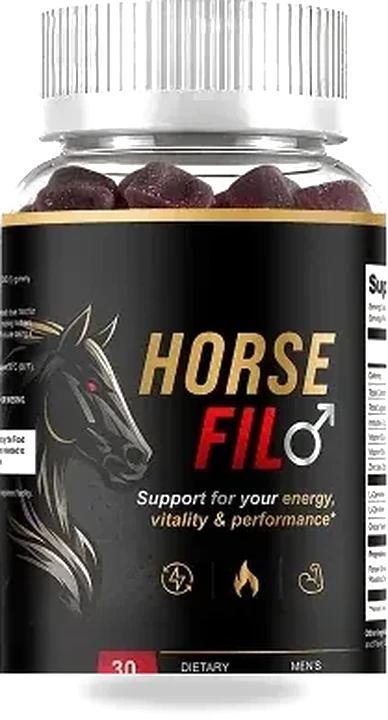
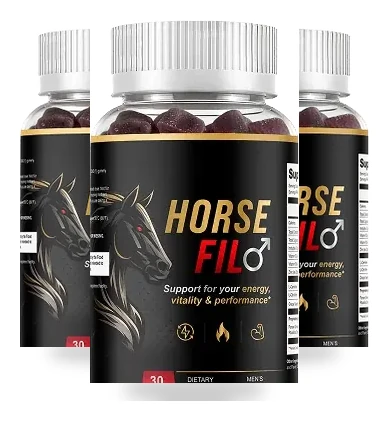
None of this is unique to glucose products. The same failure runs through men's energy and stamina formulas, including the one this site covers, whose label names six ingredients and publishes an amount for none of them — a point we make in our ingredient breakdown and one we are not going to soften. The two-claims-stacked problem that goes with these formulas is set out separately in our piece on glucose swings and concentration.

What the marks on the bottle certify, and what they do not
Certification language is the other place where meaning gets stretched. A quick map:
- USP Verified and NSF Certified are independent programmes that test whether the product contains what the label says, in the amounts stated, and screen for contaminants. This is the strongest consumer-facing signal available. It says nothing about whether the formula does anything — only that the label is truthful.
- Manufactured in a cGMP facility refers to the FDA's current good manufacturing practice rules for supplements. It concerns process controls, documentation and cleanliness. It is meaningful for consistency and irrelevant to efficacy.
- FDA registered facility means the facility appears on a register. It is not approval, endorsement, or evidence of an inspection having gone well. The FDA does not approve dietary supplements at all.
- Standardised to X% is the one to look for on any botanical. It commits the manufacturer to a measured percentage of the compound class the research tracked, which turns a milligram figure into something you can compare.
Five questions to ask before you buy
- Does every active ingredient have its own printed amount? If not, stop here.
- If there is a blend, what is its total weight, and how many ingredients share it?
- Do the botanicals state a standardisation percentage, or only a weight?
- Is there an independent testing mark, or only manufacturing and registration language?
- What is the return window, and does it survive opening the bottle? This is the practical remedy when the panel turns out to be disappointing.
Applied consistently, those five questions do more to identify the best blood sugar supplement brand on a shelf than any amount of front-of-box copy. They also explain why so few products survive the exercise: the answer to question one eliminates most of the category before you reach question two.
What this cannot do, stated plainly
Dietary supplements are not intended to diagnose, treat, cure or prevent any disease, and reading a label well does not change what the product inside is capable of. Specifically:
- A fully disclosed label does not mean the formula works. Disclosure lets you check the dose against the research. Whether that research supports anything is a separate question, and for several popular ingredients the answer is genuinely mixed.
- We cannot tell you what is inside a blend. Nobody outside the manufacturer can. Where a product hides its amounts, our answer is always “unknown”.
- Panel literacy is not a substitute for a clinician. If you are managing a diagnosed condition or taking prescription medication, that conversation comes first.
- Third-party marks verify the label, not the outcome. A USP mark on an underdosed formula certifies an accurate description of an underdosed formula.
Questions people ask
Are proprietary blends allowed to hide ingredient amounts?
Yes. US Supplement Facts rules require a proprietary blend to be identified as a blend, to declare the blend's total weight, and to list its ingredients in descending order by weight. Individual amounts are not required. That is why a blended product cannot be compared against a published trial, which always used a specific amount.
How can I tell if an ingredient is underdosed?
Divide. Take the blend's total weight, look up the amounts used in published trials for each ingredient inside it, and see whether they can physically coexist. A 500 mg blend cannot contain a gram of berberine or several grams of cinnamon. Ingredients are listed heaviest first, so anything at the end of a long list is present in small quantities.
Does an FDA registered facility mean the product is approved?
No. Facility registration means the manufacturing site appears on a register. The FDA does not approve dietary supplements, and no supplement label may claim FDA approval. Good manufacturing practice language refers to process controls rather than to whether the formula does anything.
What does standardised to a percentage actually mean?
It means the manufacturer commits to a stated proportion of a measured compound class in the extract, such as ginsenosides in ginseng. It matters because plant material varies enormously between harvests. Without a standardisation figure, a milligram weight of extract tells you very little about what is actually in the capsule.
Where to check this
- NIH Office of Dietary Supplements — Chromium fact sheet
- NIH Office of Dietary Supplements — Magnesium fact sheet
- National Institute on Aging — Dietary Supplements for Older Adults
- Mayo Clinic — Supplements: Nutrition in a pill?
- PubMed — current literature on proprietary blends and label dosing
We link to standing evidence summaries and a live literature search rather than to a snapshot of one trial, so you can check the current position yourself.
If you are weighing up a best blood sugar control supplement against a men's daily formula, run the five questions above on both panels before you decide. Visit the official store or read the formula FAQ